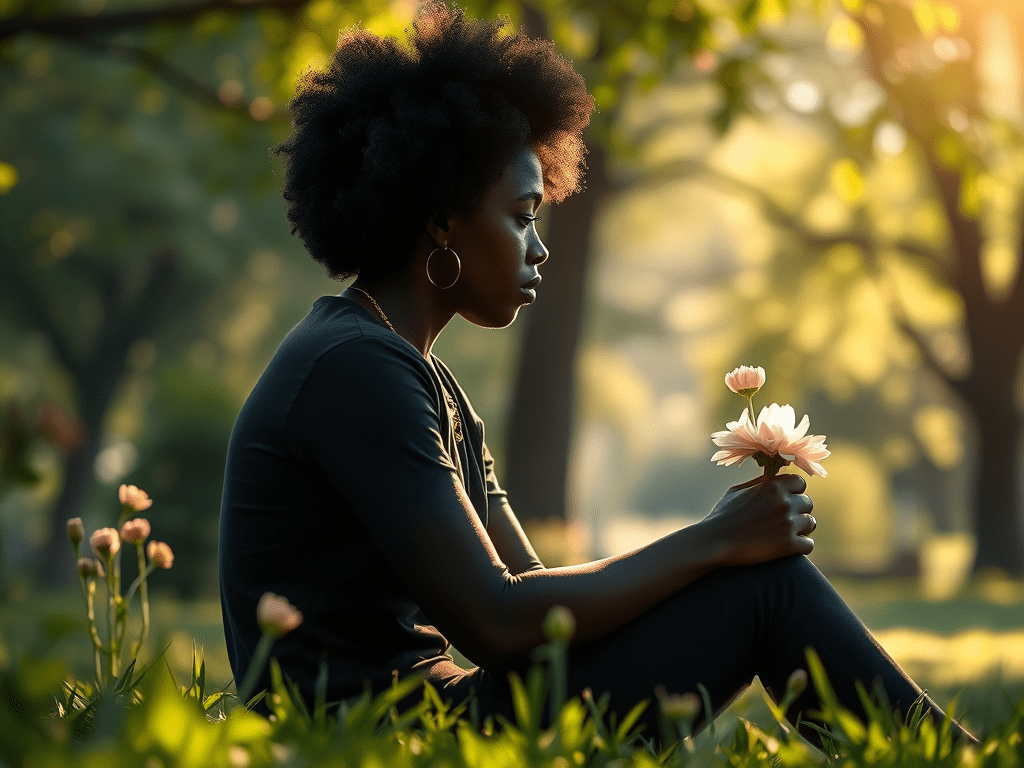
I grew up in church, but that didn’t make me religious. It didn’t make me spiritual. Being in church didn’t make me a Christian any more than standing in a garage would make me a car. Yet, those early teachings stuck with me. Right or wrong, fact or fiction, there are some things that are unshakeable. And in the still moments, they wrestle with me until I see truth in a new light.
Lately, I can’t stop thinking about the call to love our neighbor as ourselves. For much of my life, church teachings guided me to focus on the beginning of that statement. It was intrinsically linked to treating others how I’d want to be treated. It was fleshed out with the biblical definition of love. I knew how others should be treated and, as much as possible, I did just that. I have been patient and kind. I have not been envious or self-seeking. I have not been quick-tempered. I kept a short record of wrongs—not to cut people off, but to guard my heart. If they ever need me, no matter past wrongs, I show up. I have protected and trusted and hoped. I carried love for others on my back like the blessed burden it can be.
And one day, I realized I wasn’t living the truth. I wasn’t doing it right. We’re called to love our neighbors as ourselves. I was so busy loving my neighbors. So busy pouring into others as best I could—better than I knew how, sometimes. But, if I’m honest, I didn’t love them as myself.
I have not been patient or kind to myself. I haven’t been envious or self-seeking, but it’s kinda hard to do that when you’re living for others, anyway. What do you know of envy if you celebrate others’ wins as if they’re your own because you don’t know how to celebrate your own? What do you know of self-seeking when you’re rarely able to see yourself let alone seek yourself? I have been quick-tempered, often giving myself a matchhead’s worth of grace while extending my neighbors miles of rope. I have kept a long record of wrongs, many of which are examined almost nightly. I have not been my best protector. I do not and have not always trusted myself. I do not and have not always hoped for or had hope in myself. In short, I have not loved myself despite having loved my neighbors. I may have loved my neighbors more than myself. I may have even loved them better. If obedience is truly better than sacrifice, then I have done this for nought.
If someone were to ask me to list the people, the places, the things I love, I wouldn’t think to mention me. So often, we assume it’s a given—self-love. But why? What in the world would compel us to think that we live in a world where self-love reigns supreme? Selfishness? Maybe. Self-firstness? Definitely. But if I really sit and think on it, I would venture to guess that most of the isms in this world aren’t necessarily a reflection of hate for others, but a deficit of love for self. Which, on many levels, is valid. How do you love others as yourself if you don’t know how to love yourself? If the world has programmed you to think that love for yourself is linked to what they can see rather than what you can feel?
In the stillness, I am realizing that I am not alone. There are generations of people who do not know how to love themselves, but feel called to love others. To sow into others. To show up for others. And in that way, they forget to be. Forget to do. Forget how, even. Sometimes this triggers resentment. Sometimes despair. Sometimes it’s just a nagging feeling that something isn’t quite right even though it seems to be from the outside looking in. Sometimes it’s felt. Other times it’s heard. Sometimes it tunnels into us and manifests in ways that don’t make sense in the physical sense. There is always something to view in Johari’s window. Sometimes a peek is all it takes. Other times we have to climb in, find a perch, and be patient as we sit watch.
 bloom + flow
Leave a comment